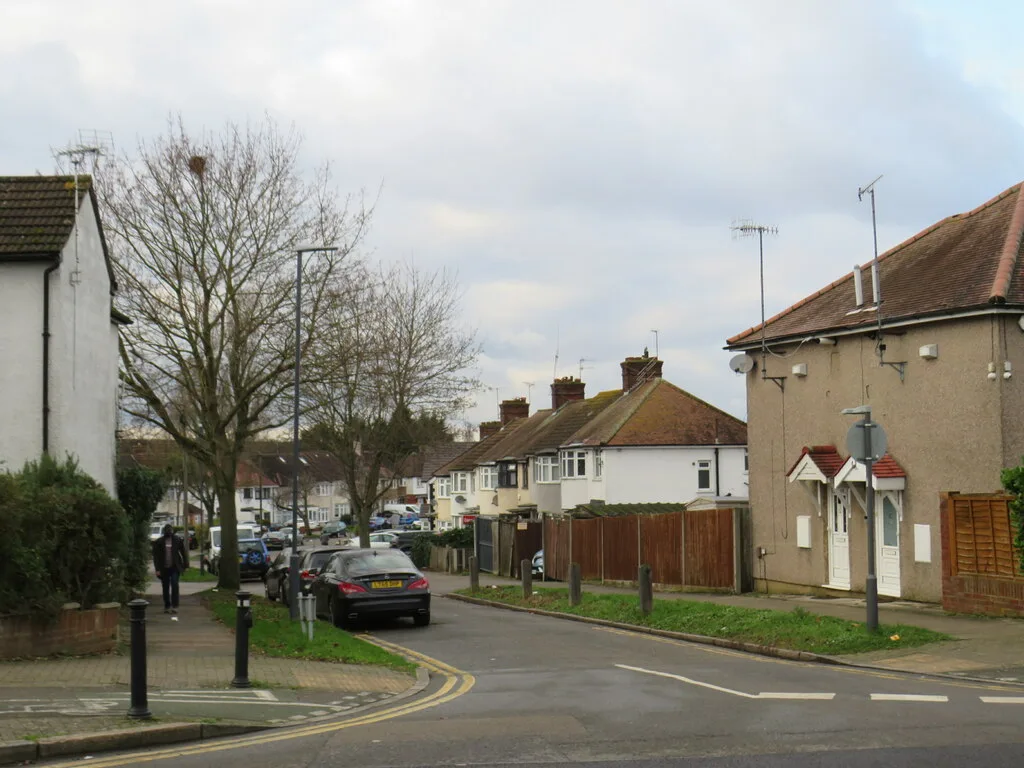

Turning a Harrow house into a 3 to 6 person HMO has needed planning permission since 12 June. Cabinet votes on 24 September on making that permanent.
Converting a Harrow house into a small house in multiple occupation has required planning permission since 12 June. Cabinet is asked on Thursday 24 September to make that rule permanent, and three people responded to the consultation on it.
The rule is an Article 4 direction. It covers every ward in the borough and it removes the permitted development right to change a dwellinghouse into a small HMO, meaning one occupied by three to six unrelated people. Cabinet agreed it on 11 June and it was made, with immediate effect, on 12 June (the report to Cabinet).
It is not a ban. Officers say so twice in the report. A small HMO is still allowed in Harrow; it now needs planning permission, which the council will judge against the Local Plan rather than having to accept automatically.
The clock that forces the vote
A direction made with immediate effect expires unless it is confirmed within six months. Harrow’s six months run out on 12 December 2026. If Cabinet does not confirm it, the permitted development right comes straight back.
Three responses, one of them a threat
The council advertised the direction in the Harrow Times, at the Resident Contact Centre and Greenhill Library, and on the boards outside both entrances to the Council Hub. The consultation ran six weeks, from 12 June to 27 July.
It drew three responses. Officers say the low number “is not unexpected”, because the direction was already in force.
The first arrived within 12 minutes of the notification going out. It said the report contained errors and that the sender would be requesting a judicial review. Nothing further has been received. The council has logged the possibility of a legal challenge as an amber risk that “cannot be fully mitigated”.
The other two were arguments about housing supply rather than procedure, and the officer replies are worth reading if you are a landlord:
- That an HMO licence would now be impossible to get, so a property would not be worth buying. Officers reply that licensing and planning are separate regimes, that an HMO needs both, and that you can apply for planning permission before you buy, although you have to notify the current owner of the application.
- That demand for HMO rooms is high and rooms are short. Officers reply that the direction is not a blanket ban and that housing need is one of the things a planning application can weigh.
- That high rents price single people out of flats. Same answer, with a pointer to Local Plan policy HO10, which steers HMOs towards places with good public transport and access to services.
- That the law already deals with overcrowding by requiring permission for HMOs of seven or more. Officers say the June evidence identified harms from small HMOs too, specifically the loss of family-sized housing and clusters of HMOs in one street.
- That extra applications and enforcement complaints would strain the council. Officers accept the pressure and say resources were secured for it.
- That the council should publish clear criteria for what it will accept. Officers point to the 12 criteria already in policy HO10.
Officers conclude that none of it warrants dropping the direction.
What it is costing
The council has funded one full-time planning enforcement officer on a one-year fixed-term contract, at £61,097 a year including on-costs, to handle the extra work. It expects planning application fees to contribute towards that.
The workload has arrived in three forms: landlords applying for certificates of lawful development to regularise HMOs that already exist, new applications for conversions, and a jump in enforcement complaints. Officers note that a large proportion of HMO enforcement complaints used to be closed with no action, because permitted development made the conversion lawful. Now every one needs at least some investigation, to work out whether the HMO predates the direction.
The open-ended cost is compensation. Because the direction took effect immediately rather than after twelve months’ notice, anyone with a freehold, leasehold or contractual interest in land can claim if permission is refused, or granted with conditions more restrictive than permitted development would have carried. A claim has to be in writing and served within twelve months of the decision, and can cover both wasted expenditure and the difference in what the land is worth. The council has set aside no budget for it, and calls the liability “an unbudgeted financial risk”.
The one thing that could still undo it
Confirmation is not the last word. The Secretary of State has to be notified, and has the power to modify or cancel an Article 4 direction at any time, before or after it is made.
Officers judge that unlikely. Interventions in London have generally concerned town centre uses rather than HMOs, and they are not aware of any intervention in a small-HMO direction anywhere, including in neighbouring Ealing, Hounslow and Hillingdon, all of which have one. The June report put it more bluntly: 23 of London’s boroughs, 72% of them, already had such a direction, and Harrow being one of the exceptions had probably made the borough a more attractive place to convert houses.
What it means for you
If you already run a small HMO, nothing changes. The direction does not remove an existing lawful use. It applies from the date it came into force.
If you are thinking of converting a Harrow house to a three to six person HMO, you need planning permission first, anywhere in the borough, and you will also need a licence under the Housing Act 2004. Harrow licenses HMOs of three or more people through its additional licensing scheme, so both regimes apply and neither substitutes for the other.
If you are buying with a conversion in mind, you can apply for permission before completing, but you have to serve notice of the application on the current owner.
If you live next door to one, an enforcement complaint is now worth making. Officers say complaints that would previously have been closed on the spot have to be investigated, to establish whether the use began before 12 June.
If you rent a room in one, the council’s own equalities assessment accepts the risk: fewer small HMO conversions may mean less low-cost housing, and it names younger people, low-paid workers and students as the groups most likely to feel it.
Cabinet meets at 6.30pm on Thursday 24 September. The decision is subject to call-in. You can see what else the borough is deciding on our Harrow planning news page.
Sources
- Confirmation of the Borough-wide Article 4 Direction relating to small Houses in Multiple Occupation (HMOs), report to Harrow Council Cabinet, 24 September 2026, signed off by the Chief Financial Officer’s representative on 27 August 2026.
- Article 4 Direction relating to small Houses in Multiple Occupation (HMOs), the June 2026 report that introduced it, for the evidence base, the London comparison and policy HO10.
- Harrow Council Cabinet, 24 September 2026, the full agenda.
Have your say