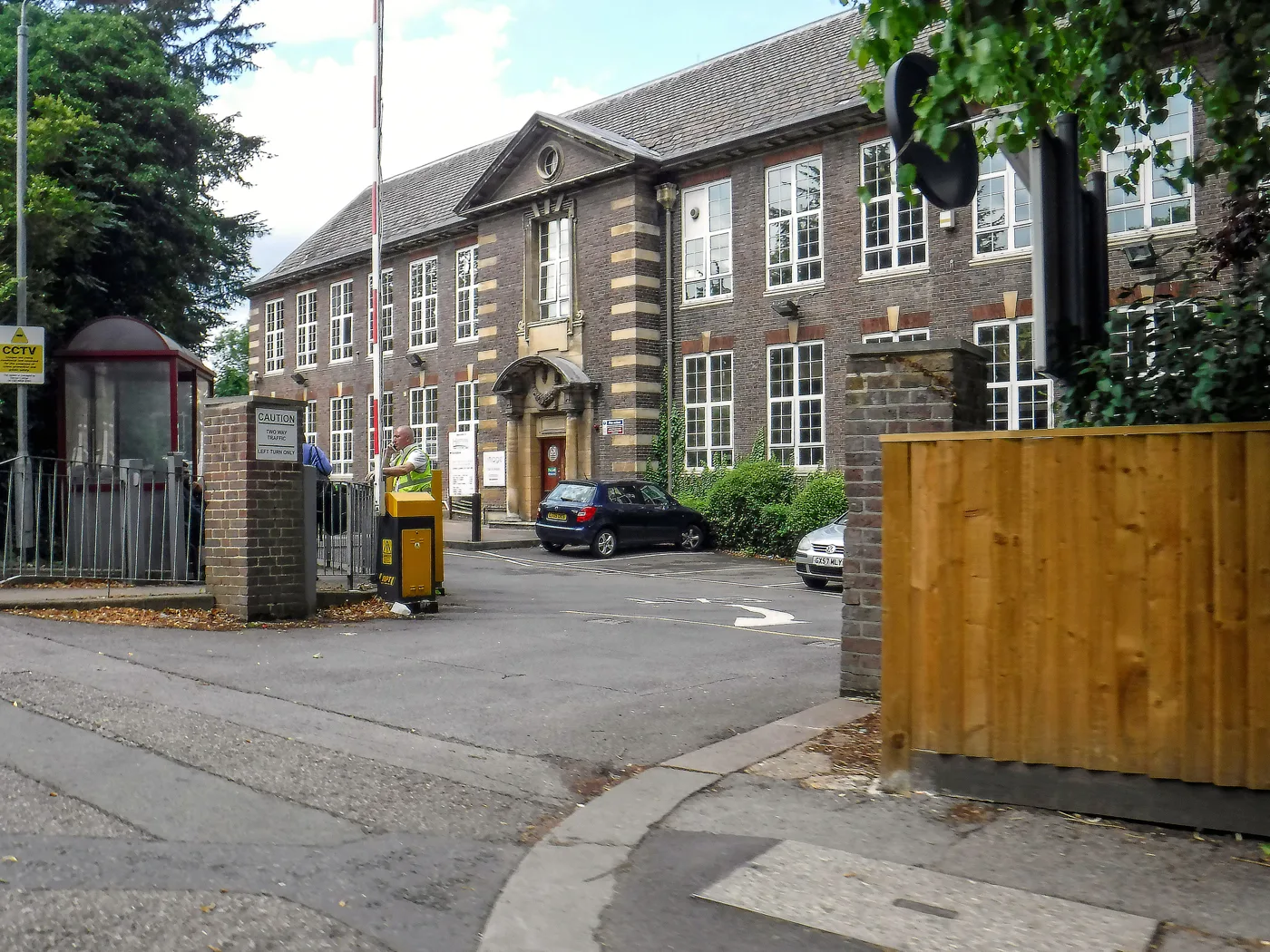

Headstone Road Surgery would move into Harrow College's listed White House, with hours running to 10pm seven days and 7 parking spaces for a 40-car peak.
A vacant Grade II listed house on the Harrow College campus would become a GP surgery and health hub, with a planning condition allowing it to open until 10pm, seven days a week. The plans went before Harrow’s planning committee on Wednesday 2 September.
The building is the White House, at the western end of the Harrow on the Hill campus on Lowlands Road. Harrow, Richmond and Uxbridge College applied in March to change its use from an educational building to a community health hub, with GP surgeries and primary healthcare rooms. The council’s officers recommended approval (committee report, application PL/0739/26).
Which surgery is moving
The hub is intended for Headstone Road Surgery. The report says the practice is “identified as at the highest level of estate-related risk and greatest need for relocation”, and that North West London Integrated Care Board supports the move. The ICB’s own consultation response warns that closing the Headstone Road practice without relocating it in time would make local pressure worse.
The numbers officers were given by the applicant:
- More than seven clinicians across a range of specialisms, against three at Headstone Road now.
- Annual appointment capacity rising from about 5,259 to about 7,200.
- 486.8 square metres of net additional floorspace, using adjacent college space, a figure corrected upward from 477 sqm in an addendum tabled on the night.
What it means for you
If it is built, the practical differences for patients are these.
- Hours. A planning condition would stop the hub opening to patients outside 7am to 10pm Monday to Friday, and 7.30am to 10pm on Saturdays, Sundays and bank holidays, without further written permission from the council. That is a ceiling on opening hours, not a promise that the surgery will use all of it.
- Getting there. The report puts the site’s Public Transport Accessibility Level at 6a, the top band. The campus sits next to Harrow-on-the-Hill station.
- Parking. Seven spaces would be set aside inside the site for the surgery. The applicant’s own transport work, using NHS data, puts the peak parking accumulation at 40 vehicles, with 70 per cent of patients arriving by car. The other 33 would be expected to use pay and display bays nearby: 24 on Lowlands Road and 24 on Lansdowne Road.
- Cycling. Four long-stay and six short-stay cycle spaces are proposed.
Harrow’s highways engineers did not object, but asked for survey evidence that those 33 on-street spaces are actually free during surgery hours, and for NHS figures on how far patients are willing to walk, before the application went further on highway grounds. Both streets sit inside a controlled parking zone, so anyone thinking of driving should read our guide to parking in Harrow first.
What the objections say
Twenty-one consultation letters went to neighbours. One objection came back. It argued that the listed building had been left to deteriorate before permission was sought, that the conservatory should be restored rather than altered, that a new path onto Lowlands Road was unnecessary, and that the car park is already full of college staff on weekdays. Officers replied that there was no evidence of deliberate neglect, and that day-to-day parking management is a matter for the site operator.
The sharper objection came from inside the council. Harrow’s own heritage and conservation officer objected, concluding that the works would cause “less than substantial harm” to the listed building at a medium level. The harm comes from altering and enlarging the historic conservatory, cutting new openings, and internal changes including a lift, a relocated staircase and the removal of internal walls.
Officers accepted that harm and weighed it against the public benefits: better healthcare, a viable long-term use for an empty listed building, and money spent on its repair. The scheme had already been amended during the application to drop a larger rear link extension and a solid front addition.
The council’s landscape architect and its biodiversity adviser both raised the loss of mature trees along the Lowlands Road boundary, next to a Site of Importance for Nature Conservation. Conditions would require a tree protection plan to British Standard BS 5837, a biodiversity gain plan and a 30-year habitat management plan.
It is not permission yet
This is the part the headlines skip. Officers did not ask the committee to grant planning permission outright. They asked it to agree the reasons for approval and to delegate the final grant to the Chief Planning Officer, once a 21-day period has run following a notice in the local press and on the site about the effect on the listed building and the conservation area, and provided no new material planning objections come in.
So there is still a window in which comments on the heritage and conservation area effects can be made. As at 6 September no such notice for the site had appeared in Harrow’s statutory planning notices. The separate listed building consent, application PL/0755/26, was recommended for outright grant.
The committee’s minutes had not been published when this was written, and Harrow’s online planning register is a JavaScript application that returns nothing to a plain request, so the resolution itself is not yet on the public record. We will update this page when the minutes appear. More Harrow cases are on our planning news page.
Sources
- Harrow Council planning committee, 2 September 2026: officer report on application PL/0739/26, The White House (proposal, consultation responses, highways and heritage assessment, conditions).
- Officer report on the concurrent listed building consent, PL/0755/26.
- Addendum to the 2 September 2026 agenda (the corrected floorspace figure).
- Meeting papers for Planning Committee, 2 September 2026.
Have your say